
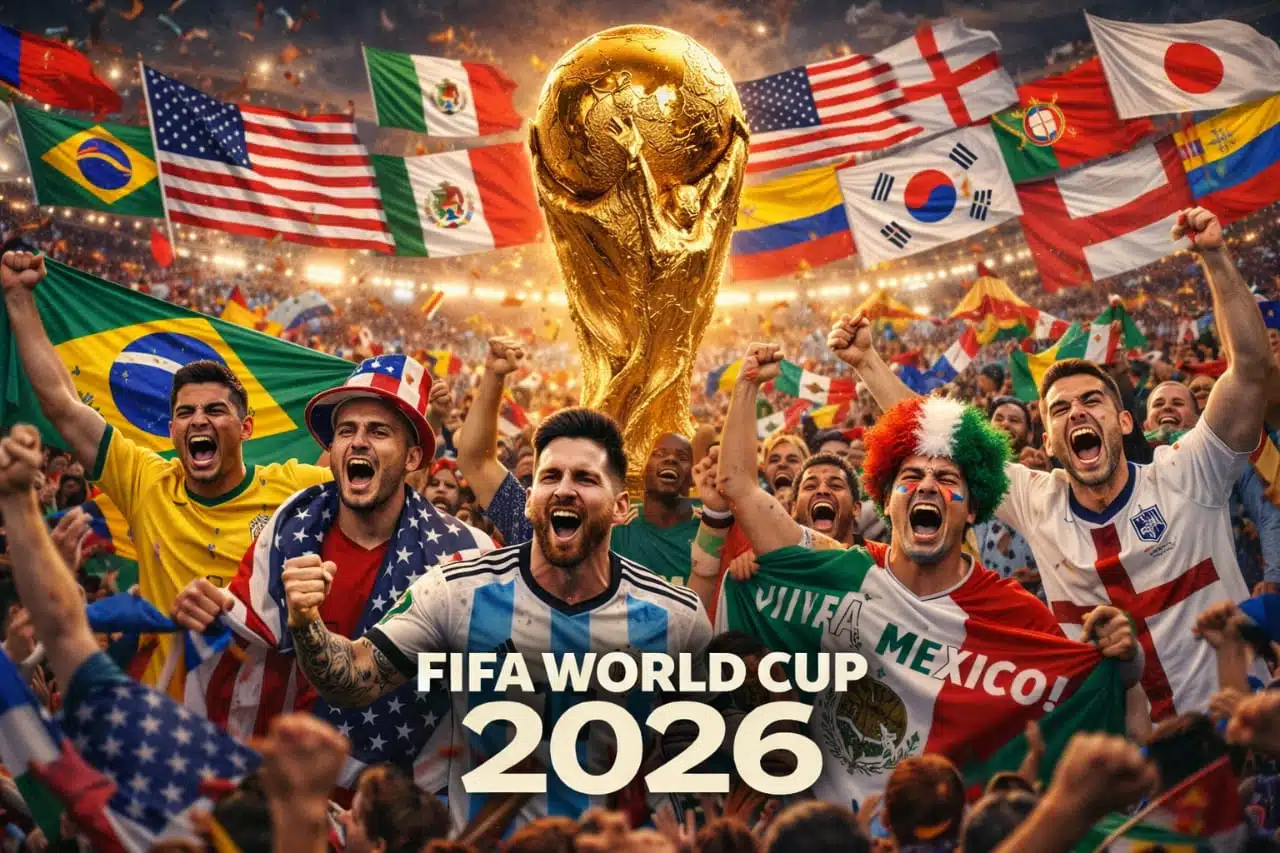
The FIFA World Cup 2026 will change global football forever.
For the first time in history, three countries will host one World Cup, 48 teams will compete, and billions of fans will experience the tournament through advanced technology and immersive digital platforms.
From economic transformation and cultural unity to sustainability and youth inspiration, FIFA 2026 is not just a sporting event—it is a global turning point.
For millions of countries that have never qualified, FIFA 2026 opens the door to history. With 48 teams, the World Cup becomes more inclusive, competitive, and globally representative than ever before. In this article we will understood very clearly that-
Why FIFA 2026 Will Change the World Forever
FIFA World Cup 2026: Why This Tournament Matters to the Entire World
How FIFA 2026 Is Reshaping Football, Culture, and the Global Economy
Why the FIFA World Cup 2026 Is More Than Just Football
Why FIFA 2026 Is Important for the World?
The FIFA World Cup 2026 is not just another football tournament—it is a historic global milestone that will reshape sports, culture, technology, economics, and international cooperation. As the first-ever World Cup hosted by three nations—the United States, Canada, and Mexico—and the first to feature 48 teams, FIFA 2026 marks a new era in the world’s most popular sport.
Football has always been more than a game. It reflects society, politics, unity, diversity, and shared human emotion. FIFA 2026 amplifies this role on an unprecedented scale, making it one of the most important sporting events in modern history. This article explores why FIFA 2026 is important for the world, from sporting innovation and economic impact to cultural unity, sustainability, and the future of global football.
A Truly Global Tournament: Expansion to 48 Teams
One of the biggest reasons FIFA 2026 matters is the expansion from 32 to 48 teams. This change dramatically increases global participation and representation.
Also read :15 Amazing facts about FIFA World Cup 2026
Why the 48-Team Format Matters
More countries get a chance to compete on football’s biggest stage
Greater inclusion for Africa, Asia, and CONCACAF nations
Emerging football nations gain exposure and development opportunities
Fans from more regions feel represented and invested
For many countries, qualifying for the World Cup was once nearly impossible. FIFA 2026 democratizes global football, allowing new stories, new heroes, and new rivalries to emerge.
First World Cup Hosted by Three Countries
FIFA 2026 will be jointly hosted by the USA, Canada, and Mexico, making it the first tri-nation World Cup in history.
Why This Is Historically Significant
Demonstrates international cooperation on a massive scale
Sets a new model for future mega-events
Shares economic and infrastructural responsibilities
Strengthens diplomatic and cultural ties across borders
This multi-nation hosting reflects the modern, interconnected world and shows how sports can bridge political and cultural divides.
Know about: FIFA World Cup 2026
Economic Impact on a Global Scale
The FIFA World Cup is one of the largest economic engines in sports, and FIFA 2026 is expected to generate hundreds of billions of dollars globally.
Economic Benefits Include
Massive tourism growth across host cities
Job creation in construction, hospitality, transport, and services
Boost to local businesses and global brands
Increased foreign investment and infrastructure development
The United States alone is expected to see record-breaking tourism numbers, while Canada and Mexico benefit from long-term infrastructure upgrades.
Are you know :Pele| The Magical King of Football| Black Pearl
Growth of Football in North America
While football (soccer) dominates much of the world, FIFA 2026 plays a crucial role in accelerating the sport’s growth in North America.
Why This Is Important
Expands football’s influence in the world’s largest sports market
Inspires youth participation and grassroots development
Strengthens leagues like MLS, Liga MX, and Canadian Premier League
Attracts global sponsors and broadcasters
FIFA 2026 could permanently change the sporting landscape of the region.
Cultural Unity and Global Celebration
Few events unite humanity like the FIFA World Cup. FIFA 2026 will bring together billions of people across languages, religions, and borders.
Football as a Cultural Bridge
Fans share emotions, traditions, and stories
Host cities become global cultural hubs
Promotes tolerance, diversity, and shared identity
Encourages peaceful international interaction
In a divided world, FIFA 2026 stands as a reminder that shared joy and passion still connect us.

Technological Innovation in Sports
FIFA 2026 will be the most technologically advanced World Cup ever, setting new standards for sports innovation.
Key Technological Advancements
Advanced VAR and AI-assisted refereeing
Smart stadiums with immersive fan experiences
Enhanced broadcast quality (8K, VR, AR)
Data analytics for player performance and fan engagement
These innovations will influence not just football, but the future of global sports entertainment.
Sustainability and Environmental Responsibility
FIFA 2026 places strong emphasis on sustainability, reflecting growing global concern for climate change and environmental responsibility.
Sustainability Initiatives
Use of existing stadiums to reduce carbon footprint
Energy-efficient infrastructure
Sustainable transportation systems
Environmental awareness campaigns
The tournament aims to balance global celebration with ecological responsibility, setting an example for future mega-events.
Youth Inspiration and Grassroots Development
For millions of children worldwide, the World Cup is a dream factory. FIFA 2026 will inspire the next generation of footballers, coaches, and fans.
Long-Term Impact on Youth
Increased access to football programs
Role models from diverse backgrounds
Investment in grassroots football
Growth of women’s and youth football
This inspiration extends far beyond the tournament itself.
Media, Digital Reach, and Global Storytelling
FIFA 2026 will be the most watched sporting event in history, powered by digital platforms and social media.
Why Media Reach Matters
Billions of viewers across TV and streaming platforms
Real-time global conversations on social media
New opportunities for content creators and influencers
Enhanced storytelling from fans’ perspectives
The World Cup is no longer just watched—it is experienced globally in real time.
Political and Diplomatic Significance
While FIFA remains officially neutral, the World Cup inevitably plays a role in global diplomacy.
Soft Power Through Sports
Strengthens international relations
Encourages peaceful dialogue
Enhances national branding
Promotes global cooperation
FIFA 2026 showcases how sports can serve as a platform for unity rather than conflict.

Legacy Beyond Football
The importance of FIFA 2026 extends far beyond 90-minute matches.
Long-Term Legacy Includes
Improved infrastructure
Global cultural exchange
Stronger football ecosystems
Economic and social development
Host cities and participating nations will feel the impact for decades.
Why FIFA 2026 Matters More Than Ever
In a world facing political tension, climate challenges, and social divides, FIFA 2026 represents hope, unity, and shared humanity.
It matters because:
It includes more nations than ever before
It brings the world together across borders
It pushes innovation and sustainability
It inspires future generations
It celebrates what unites us as humans
Conclusion: FIFA 2026 as a Global Turning Point
The FIFA World Cup 2026 is not just a football tournament—it is a global event with worldwide consequences. From expanding inclusivity and economic growth to cultural unity and technological advancement, FIFA 2026 symbolizes the evolution of global sports and global society.
As the world watches, cheers, and dreams together, FIFA 2026 will remind us why football is called “the world’s game.”